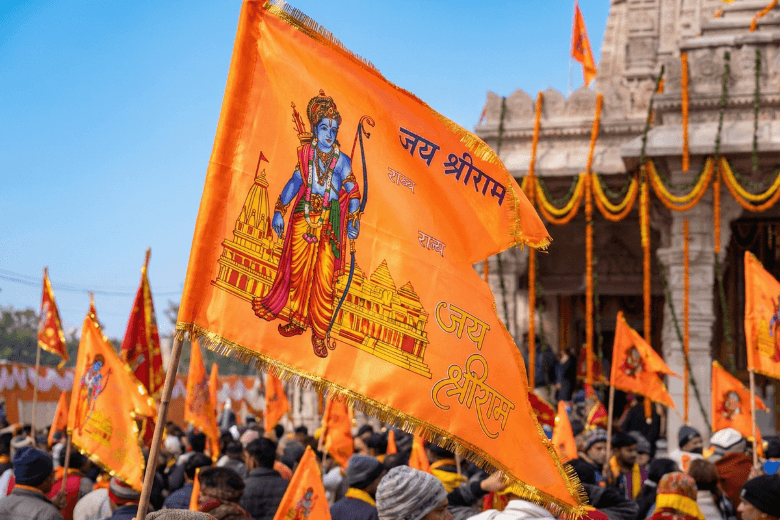
Ayodhya, the sacred city that for ages has been identified as the birthplace of Lord Ram, has entered a transformational new chapter with the completion of the Ram Mandir, the consecrated “Dhwajarohan” (flag-hoisting ceremony) on November 25, 2025, being the highlight, is not only a landmark in religion but also the starting point of a new cultural vision for India. The present developments depict less of temple tourism and more of a cultural fact: it is the reassertion of heritage, identity, and a spiritually-cultural landscape reimagined.
The event of Dhwajarohan on the 25th of November, 2025, saw the “Dharma Dhwaj”, a saffron flag with religious symbols, being placed on the Ram Mandir’s shikhar. The ceremony was headed by Narendra Modi along with other senior officials.
This was not just a ritual; the Prime Minister, in his speech, emphasized that “Old wounds of several centuries are getting healed today,” thus he saw the event as a finale of a 500-year-long resolution. The Dharma Dhwaj was thus declared by the PM as a sign of India’s civilisational comeback, a flag combining under it the ideals of duty, heritage, and cultural pride that will lead the nation.
Besides, he invited the people to give up the “slave mentality”, attributing it to the colonial-era education system and especially to the British officials like Thomas Macaulay, and to regain pride in India’s own civilizational roots before 2047, the hundred years of India’s independence.
Ayodhya is not only being marketed as a place for religious tourism but a symbol of cultural awakening and national identity, a move that has far-reaching consequences for culture, politics, tourism, and urban renewal.
Ayodhya is becoming a landmark chapter in its past when faith entered into a partnership with progress, and the city was redefined culturally for a new generation. Now, after the completion of the Ram Mandi, Ayodhya is a city that represents the revival of heritage, pride of the nation, and spiritual upsurge very strongly.
Once the Ram Mandir has been officially completed, Ayodhya will be among the most prominent spiritual destinations in India. The band of the flag drew the attention of the entire nation and the discussions about it treated the temple not just as a local religious site but as a milestone of civilization.
The next big thing in the travel business for agents from Gujarat (particularly Ahmedabad) as well as the rest of India, is the opening up of this huge market. Agents can serve both the devotees who are looking to have a darshan and the travellers who want to do cultural heritage tourism by creating pilgrimage-cum-heritage packages. Customized “heritage-plus” journeys that mix spiritual pilgrimage, heritage-city walks, cultural immersion, transport, and hospitality can lure different age and interest groups.
In the light of Ayodhya’s revival, the terms holiday packages from Ahmedabad to Ayodhya, pilgrimage packages, temple tourism India, spiritual tourism Uttar Pradesh, Ayodhya heritage city tours, and the like, are highly likely to be searched by the next travellers.
The return of Ayodhya as not only a symbol of faith but also of cultural identity is melting the snow of different segments of society. Along with the bandhan speech, the Prime Minister mentioned that Ram is not only one of the historical characters or gods, “Ram is one value.”
The leadership, by its call to the people to “get rid of the slavery mentality” and get back their civilisational pride, is hinting at a cultural and ideological change of more than just the narrative.
Such a storyline connects fables, heritage, national identity, and the current desire for a “developed India by 2047.” For Ayodhya, the cultural heritage will not only be strengthened through the rituals but also through the civic identity, education, tourism, and urban development of the city in the long run.
Ayodhya is stepping into a new era where devotion, culture, and modern development blend seamlessly. With the inauguration of the Ram Mandir in Ayodhya, the city is transforming from a sacred destination to a global cultural landmark. Today, Ayodhya represents not just faith, but a renewed sense of heritage, pride, and national identity.
The 2025 Dhwajarohan ceremony, the moment when the Dharma Dhwaj was hoisted atop Ram Mandir, goes far beyond a simple religious event. It is a major turning point for Ayodhya: a place where spiritual faith, heritage identity, cultural pride, and the national narrative all come together. Ayodhya is becoming a “heritage city” that is not only the source of religious tradition but also the place for the next generation of tourism, cultural revival, and economic gain.
This is the time for travel enterprises, particularly those located in and around Ahmedabad, to seize the moment and construct holiday plans that are comprehensive and impactful. To extend an invitation to tourists that is beyond just a visit but a journey of faith, heritage, identity, and rediscovery. For the whole of India, Ayodhya’s comeback is a declaration: that history, spirituality, and cultural identity are still at the core of its changing national story.
Getting the best price is great, getting the best value is even better. We have have been delivering the promise of providing the support and service you expect since last 65 years.
We handle all sorts of group requests and can help you customize the perfect package whatever your group size or needs.
Our team is standing by to assist from the time you enquire about a tour until the last day. Our goal is to ensure everyone has a great holiday experience.

Serving travelers since 1950, we are Gujarat’s oldest tour provider with 70,000+ happy customers. With four generations of trusted experience, we offer well-planned tours, personalized service, and unforgettable journeys across India.
WhatsApp us